The three movies in question are Sergeant York (1941), This is the Army (1943), and A Guy Named Joe (1943).

Sergeant York takes place in a WWI that serves as an analog for the then-happening WWII, showing American heroes willing to do whatever it takes for their country. It was the highest grossing movie of 1941 and the 12th-highest grossing movie of the 1940s (7th excluding movies made after the war). Wikipedia says (although it's Wikipedia) that "Sergeant York benefitted from the attack on Pearl Harbor, which occurred while the film played in theaters, and became 1941's top box office hit. The film's patriotic theme helped recruit soldiers; young men sometimes went directly from the movie theater to military enlistment officers." Projections of War makes the same point about Pearl Harbor, and while the second part may or may not be accurate, Projections also notes its influence on American enlistment.

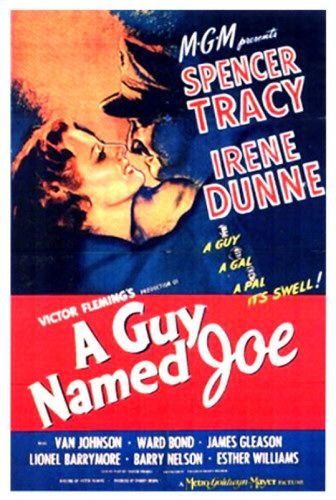
The dual highest grossing movies of 1943 were similarly war-themed and featured American men sacrificing their lives and loves for the good of the war. The first, This is the Army is a musical and A Guy Named Joe has some strange supernatural elements to it (the main character dies and comes back as a spirit to guide a new pilot to success in the fight), but they generally carry the same pro-war, patriotic themes. I have a hard time believing movies like these would do well, critically or commercially, today.
All in all, I've found some compelling evidence of the differences between WWII cinema and Post-9/11 cinema. In WWII, Americans seemed to openly support movies that explicitly referenced the war effort, and as such, there wasn't as much of a need for mainstream movies to deal with these themes subtly or metaphorically like in the Post-9/11 world. There isn't quite as much to analyze from this period because everything was almost totally literal and earnest in what it was saying, while Post-9/11, you can dig into all kinds of movies and find meaning and significance in seemingly completely unrelated pieces of work.
Working from these two different eras, I think I may be able to connect them once I start exploring Vietnam-era cinema. I believe this may be the turning point because it's the time period where Americans started to question the integrity of their military missions. Nobody was protesting WWII nearly as loudly as some Americans were protesting Vietnam, and I feel like the movies will reflect the war as the point where mainstream American cinema became less supportive, and more critical and contemplative, towards war efforts.

No comments:
Post a Comment