Monday, June 18, 2012

Bibliography


Bibliography

Andersen, Robin. A Century of Media, A Century of War. New York: Peter Lang, 2007.

Any Bonds Today? Dir. Robert Clampett. Perf. Mel Blanc. 1942.

Battlestar Galactica. Dir. Ronald D. Moore. Perf. Edward James Olmos et al. 2004-
2008.

Dawidziak, Mark. Attacks might have set tone for grim TV drama -- or not. 09
September 2011. 23 April 2012 <http://www.cleveland.com/tv-
blog/index.ssf/2011/09/tv_and_sept_11.html>.

Doherty, Thomas Patrick. Projections of war : Hollywood, American culture, and
World War II. New York: Columbia University Press, 1999.

Harry Potter and the Half-Blood Prince. Dir. David Yates. Perf. Daniel Radcliffe. 2009.

Heinze, RĂ¼diger. Trauma, Morality & Conformity: American (Super)Heroes After
9/11. 01 April 2007. 03 May 2012
<http://webdoc.gwdg.de/edoc/ia/eese/artic27/heinze/6_2007.html>.

Kellner, Douglas. Cinema Wars: Hollywood Film and Politics in the Bush-Cheney Era.
Malden: Wiley-Blackwell, 2010.

McKenny, Mike. The Subversive Ability of Popular Culture: Superhero Movies Post
9/11. 23 July 2011. 03 May 2012 <http://hopelies.com/2011/07/23/the-
subversive-ability-of-popular-culture-superhero-movies-post-911/>.

Roshwald, Aviel and Richard Stites. European culture in the Great War : the arts,
entertainment, and propaganda, 1914-1918. New York: Cambridge
University Press, 2001.

Zammit, Deanna. We'll Always Have the Movies: American Cinema During World
War II. 10 June 2006. 30 April 2012
<http://www.fordham.edu/images/whats_new/magazine/summer06/books.pdf>.

Other YouTube videos used:

Act of Valor Trailer: http://www.youtube.com/watch?v=ZnlPgo9TaGo
Sergeant York Trailer: http://www.youtube.com/watch?v=dhSOxRvxGoU

Sunday, June 3, 2012

Dipping my toe in the Vietnam Era

I've been examining box office numbers (because that's all I do now, apparently) for the Vietnam years - the best figures I've been able to find are here: http://www.filmsite.org/boxoffice2.html - and from the years of 1955-1975, there aren't many discernible patterns. I did notice that in the early years of the war, many of the highest-grossing movies were either Biblical adaptations - "The Ten Commandments," "Ben-Hur," and (wait for it) "The Bible" - or decidedly anti-war/liberal-minded movies about WWII (war movies from war eras that are about one war but, y'know, really about another one are pretty popular), like The Bridge on the River Kwai and the musical South Pacific. Honestly these trends send me kind of mixed messages, but the general idea that I'm getting is that in this tumultuous time period, audiences are shifting away from pro-War material, but still consider themselves moral, religious people who enjoy a good Biblical epic every now and then. Also a lot of James Bond movies. This is a pretty big change from the 40s, where many of the most successful movies were blatantly pro-war and pro-American. This shift in box office results can be linked, I think, to the shift in social attitudes towards war that the Vietnam War (which a lot of Americans considered to be an unnecessarily and immoral war) caused. Which leads me into my...*drumroll*...tentative thesis!


Which is this:

"Western civilization's changing attitudes towards war are reflected in the mainstream American cinematic landscape from WWII to the present."

On a similar note, the Projections of War book made an interesting point about how a lot of movies from WWII that were technically about WWI served to recontextualize WWI as something more romantic and noble in order to garner support for WWII. I think a similar recontextualization is evident in the Vietnam Era, with movies that deglorify WWII and show the darker side of things. Because it's easy to have one war as a placeholder for another in the service of commentary, a lot of movies made during wartimes seem to aim to paint previous wars in the light that they want current wars to be seen. "War is hell" wasn't exactly the sentiment in 1940s cinema, but I think you'd be hard pressed to find a popular war movie made after 1970 or so, about any war, that doesn't at least touch on it. The winds have changed.

Wednesday, May 30, 2012

Wild speculation now available in graph form

Earlier I mentioned (or maybe not, I don't remember) the idea that the most financially successful movies in the superhero genre are also the most critically acclaimed, an anomaly in the world of mainstream American cinema (critically panned comedies, horrors and drama dominate the box office all the time). I tested this theory by comparing the RottenTomatoes scores and Box Office Intakes of 29 major superhero movies from the last 10 years (ie Post-9/11), and sure enough:


There's definitely a correlation there (a strong one, says my limited knowledge of data management), implying that in superhero movies, what appeals viscerally/subconsciously to the average moviegoer is also what appeals intellectually to professional critics, which isn't usually the case. As for what this might mean...I'm pretty sure I explained my thoughts behind the theory (which has now been mathematically proven!) in an early post, but if not, you'll hear all about it in my seminar.

Tuesday, May 29, 2012

Yet more WWII, and a turning point?

I've been reading through "Projections of War" some more and I've found some things that further exemplify my idea that in the 1940s, movies could still be successful despite being one-sided, propagandistic and pro-American during the war (something difficult to get away with with the more liberal contemporary viewing audience). After finally being able to access the site that gives box office information from the 1940s (the only site, somehow; I thought this was the internet), I've found that from 1940-1945, 3 of the 8 highest grossing movies from each year (two years had ties) were war movies of the sort described in earlier posts and two were children's movies (Pinocchio for 1940 and Bambi for 1942) - so, basically, 3 of the 6 highest grossing "adult" movies were about war.

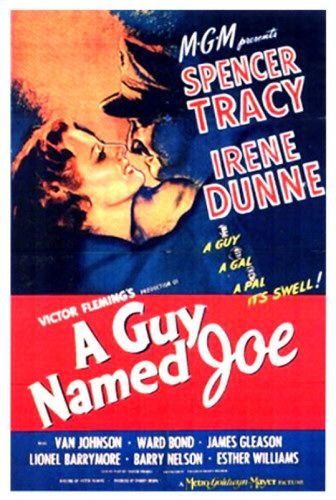
The three movies in question are Sergeant York (1941), This is the Army (1943), and A Guy Named Joe (1943).


Sergeant York takes place in a WWI that serves as an analog for the then-happening WWII, showing American heroes willing to do whatever it takes for their country. It was the highest grossing movie of 1941 and the 12th-highest grossing movie of the 1940s (7th excluding movies made after the war). Wikipedia says (although it's Wikipedia) that "Sergeant York benefitted from the attack on Pearl Harbor, which occurred while the film played in theaters, and became 1941's top box office hit. The film's patriotic theme helped recruit soldiers; young men sometimes went directly from the movie theater to military enlistment officers." Projections of War makes the same point about Pearl Harbor, and while the second part may or may not be accurate, Projections also notes its influence on American enlistment.


The dual highest grossing movies of 1943 were similarly war-themed and featured American men sacrificing their lives and loves for the good of the war. The first, This is the Army is a musical and A Guy Named Joe has some strange supernatural elements to it (the main character dies and comes back as a spirit to guide a new pilot to success in the fight), but they generally carry the same pro-war, patriotic themes. I have a hard time believing movies like these would do well, critically or commercially, today.


All in all, I've found some compelling evidence of the differences between WWII cinema and Post-9/11 cinema. In WWII, Americans seemed to openly support movies that explicitly referenced the war effort, and as such, there wasn't as much of a need for mainstream movies to deal with these themes subtly or metaphorically like in the Post-9/11 world. There isn't quite as much to analyze from this period because everything was almost totally literal and earnest in what it was saying, while Post-9/11, you can dig into all kinds of movies and find meaning and significance in seemingly completely unrelated pieces of work.


Working from these two different eras, I think I may be able to connect them once I start exploring Vietnam-era cinema. I believe this may be the turning point because it's the time period where Americans started to question the integrity of their military missions. Nobody was protesting WWII nearly as loudly as some Americans were protesting Vietnam, and I feel like the movies will reflect the war as the point where mainstream American cinema became less supportive, and more critical and contemplative, towards war efforts.

Tuesday, May 22, 2012

WWII Continued...


Just a short one. I've been reading through "Projections of War"by Thomas Doherty, and I think that the following quote sums up WWII cinema quite well:

From the vantage of half a century, the film record of 1941-1945 is condescended to as quaint or condemned as duplicitous. The technique seems hopelessly antiquated, the sensibility laughably naive...Writing in the film magazine Premiere, critic David Denby vented a common current-day sentiment: "World War II pictures (especially ones made during the conflict) look childish and banal - morally hapless in the dehumaniation of the enemy, naive in their glib underestimation of the spiritual devastations of combat, their unshadowed faith in the democratic and egalitarian American future." Against the ruthless honesty of today's R-rated, FX-laden spectacles and the searing vision of the cutting-edge auteur, classic Hollywood cinema sanitizes the horror and flinches before the ghastly realities. 

I feel like this is a more or less accurate assessment of a lot of the government-sponsored pro-war movies from the era. Compared to today's war movies or war-related movies, they're especially one-sided and propagandistic. I wonder when and why, specifically, this started to change.

World War II

I've been doing more research on the WWII era, and, like I noted in the last post, it's difficult to find a good record of movies and their significance in the era when they don't relate directly to the war in some way or another. But I think this could be significant in itself when compared to the Post-9/11 era. In WWII there were a lot of mainstream propaganda movies and movies dedicated to directly and explicitly vilifying the enemy and glorifying the war effort, but movies like that are few and far between in today's culture. I've got a few ideas as to why - movies like this aren't "politically correct" anymore, or audiences are generally more liberal or anti-war - but I think it's an interesting difference. Either Americans have lost their taste for fiercely pro-American cinema, or the propaganda is getting a lot subtler. More on this to come.

I've also been watching a few videos that further exemplify the differences between the WWII era and today, and these videos are Bugs Bunny cartoons. Here are two of the more interesting ones that I've watched - "Any Bonds Today" and "Herr Meets Hare":


The second video I found especially interesting because the war effort is never played for comedy (ridiculing the enemy, etc.) anymore as it seems to be here. Now, don't get me wrong, there are comedies about war in the Post-9/11 world, but the significant difference is that pretty much all of those comedies (Four Lions comes to mind, and so does the recent Sacha Baron Cohen movie The Dictator) aren't playing it straight but rather satirizing Western views towards the war. These Bugs Bunny cartoons are, from my point of view, surprisingly earnest with their pro-American values and completely serious about making fun of the enemy. This kind of stuff wouldn't fly today, I don't think, for the same reasons I listed above.

Interestingly, both of these videos loaded on ads for the Red Tails DVD - you might see them when you watch the embedded versions - that declare the movie as "feel-good" and boast the characters as "American heroes". Never heard of Red Tails? That wouldn't surprise me, because it was a total flop. Maybe this kind of earnestness about war has no place in the media landscape of present-day Western society.

Thursday, May 10, 2012

Heading to the Past

I'm afraid I'm hitting a roadblock. Finding examples of movies from the Post-9/11 era and ideas about how they reflect contemporary culture is pretty easy, considering it's a very "current" issue. However, finding examples of movies from the WWII, Vietnam War and Cold War eras is proving difficult because the only things I'm able to find are examples of movies about WWII, the Vietnam War and the Cold War, or examples of cinematic propaganda released during those times, neither of which are exactly what I'm looking for. The propaganda is at least slightly more useful, but again, off target.

I think to remedy this I might have to do some specific movie-watching. Because this is a topic that is, apparently, not very often written about, I think I might have to find some popular/successful movies and/or TV series from these eras and watch them myself to see what I can find. Skimming the box office successes from each of these eras (http://www.the-numbers.com/movies/#YearIndex), I'm not seeing nearly as clear a pattern as I was with the Post-9/11 years. But since I'm supposed to use the research to form my thesis and not the other way around, I'll simply have to incorporate these findings into my final product. Perhaps the fact that there is no distinct pattern or trend is significant in itself. I have books at home that will hopefully be able to shed some more light on this (unless they too only cover movies about the wars and/or propaganda), so there's still some hope.

The reason I don't want to focus on propaganda film is because A) somebody else is already covering propaganda for their own seminar, and B) I'm looking for more natural trends and patterns to see how they reflect the culture of the times - propaganda is by nature forced and not an accurate reflection of how the people feel, but how the government wants them to feel. Propaganda certainly has its significance, but it is only marginally relevant to my topic (I will explore briefly how well propagandistic films fare at the box office), so I don't want to focus in too much on it.

I also found this interesting article, following up on the Oscar angle, about how the Best Picture nominees all follow a "reassuring" trend. I still haven't decided whether to incorporate the Oscars into my research (their relevance is...questionable), but it's an interesting read nonetheless: http://www.avclub.com/articles/how-all-nine-best-picture-nominees-reassure-us-abo,69629/